early autumn, before Anne's first Redmond term
Autumn Farewell
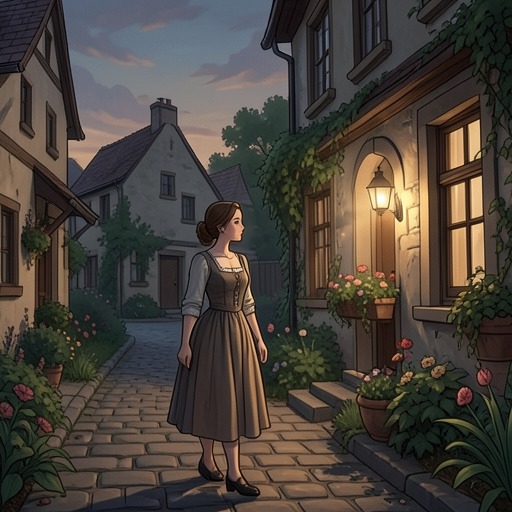
While gathering apples at [Green Gables](entity:location-recall-location-green-gables-e9744a21c012), [Anne Shirley and Diana Barry](entity:relation-recall-relation-anne-shirley-and-dia-2f4b5f9b21e0) reckon with the changes ahead: [Miss Lavendar](entity:character-recall-character-miss-lavendar-1f1feb25cc17) has married, the Allans have left, and Anne and [Gilbert Blythe](entity:character-recall-character-gilbert-blythe-3fdbcec6568b) are about to go to college. Their familiar world feels poised at a parting of the ways, even as Diana's engagement to [Fred Wright](entity:character-recall-character-fred-wright-056b71737628) makes adulthood vivid and immediate.
the evening before Anne leaves for Redmond
A Hand Withdrawn
On the bridge by [Lake of Shining Waters](entity:location-recall-location-lake-of-shining-wate-a8d5b7da9810), Gilbert lays his hand over Anne's. She pulls away and hurries home, alarmed that a new feeling might spoil their old companionship. She insists to herself that boys should be sensible, though the touch lingers in her thoughts.
the same evening
Davy's Complaint
At [Green Gables](entity:location-recall-location-green-gables-e9744a21c012), [Davy Keith](entity:character-recall-character-davy-keith-26dd35e51acf) explains that he cried not because [Dora Keith](entity:character-recall-character-dora-keith-ec78293ff184) fell down the cellar steps, but because he missed seeing it. He also asks Anne not to leave, and reveals that a neighbor has claimed she is going to college to catch a husband. Anne tells him she means to study and learn.
the week before Anne's departure
The Farewell Party
The [A.V.I.S.](entity:organization-recall-organization-a-v-i-s-f71fd3c2a6fc) gives Anne and Gilbert a farewell gathering at the Pye home. Anne receives Shakespeare and an affectionate address in recognition of her work for the society; Gilbert receives a fountain pen. The warmth of the old circle lifts Anne, until she deliberately lets [Charlie Sloane](entity:character-recall-character-charlie-sloane-2e029ed22f77) escort her home to punish Gilbert for another sentimental remark.
the evening before Anne leaves
The Wild Apple Walk
After several [Avonlea](entity:location-recall-location-avonlea-5fb88633986b) women undermine Anne's confidence about college, Gilbert takes her into the woods to find a wild apple tree he discovered in spring. Its fruit restores her spirits, and she decides she will love [Redmond](entity:location-recall-location-redmond-914d09bbfc28) and make the most of her years there. Their easy walk briefly recovers the old comradeship, though each privately senses more beneath it.
the following Monday morning
Anne Leaves Avonlea
In heavy rain, Anne says goodbye to [Green Gables](entity:location-recall-location-green-gables-e9744a21c012), where [Marilla](entity:character-recall-character-marilla-5179e5dcd9a6) tries to conceal her emotion and [Davy](entity:character-recall-character-davy-f48d61c26341) hides in a closet rather than face the parting. Anne travels with Gilbert and Charlie, grieving that even vacation visits cannot restore the life she is leaving behind.
the evening of Anne's arrival
A Familiar Face in Kingsport
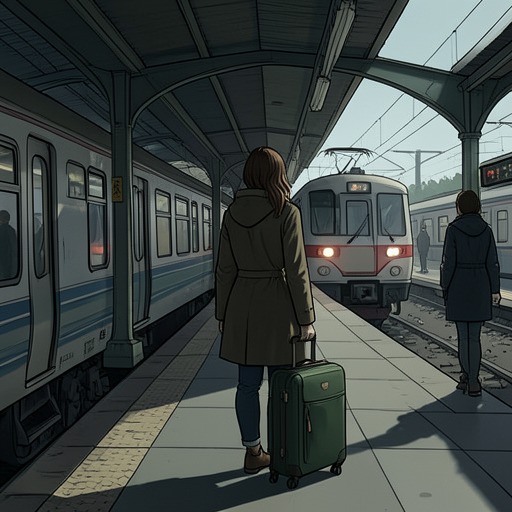
At the crowded [Kingsport](entity:location-recall-location-kingsport-7ab0733e002e) station, Anne is bewildered until [Priscilla Grant](entity:character-recall-character-priscilla-grant-23f2aeeffc3b) greets her and takes her to their boardinghouse. The familiar companionship steadies Anne, though her room overlooks [Old St. John's Cemetery](entity:location-recall-location-old-st-john-s-cemete-075eeff2b2b7) rather than the home she misses.
the first days of the fall term
The First Day at Redmond
Anne and [Priscilla](entity:character-recall-character-priscilla-4c0f8c1856b2) register at [Redmond](entity:location-recall-location-redmond-914d09bbfc28) and feel painfully insignificant among established students and unfamiliar faces. Anne notices a pretty, solitary freshman who seems as lonely as she feels. Seeking trees and quiet, the friends turn toward [Old St. John's Cemetery](entity:location-recall-location-old-st-john-s-cemete-075eeff2b2b7).
the first week at Redmond
Meeting Philippa Gordon
In the cemetery Anne and [Priscilla](entity:character-recall-character-priscilla-4c0f8c1856b2) approach the lonely student, [Philippa Gordon](entity:character-recall-character-philippa-gordon-d57b69a32c11). Phil introduces herself with frank charm, confessing her indecision, her wish to be admired, and her reluctance to marry before she has enjoyed life. Her humor and warmth quickly turn three strangers into friends.
during Anne and Priscilla's first cemetery visit
The Middy's Grave
Phil points out the grave of a young midshipman killed in the fight between the Shannon and the Chesapeake. Anne imagines the naval encounter and leaves her pansies on the boy's grave, moved by the courage recorded in its epitaph. The episode shows how history and imaginative sympathy make the unfamiliar city feel intimate.
the first weeks of Anne's freshman year
The Freshmen Find Their Footing
After an awkward beginning, Anne, [Priscilla](entity:character-recall-character-priscilla-4c0f8c1856b2), and Phil find their place in [Redmond](entity:location-recall-location-redmond-914d09bbfc28)'s classes and social life. Phil's popularity opens doors for her friends, while Anne's strong work in English earns notice. A sense of class identity replaces their first-day isolation.
the annual Arts Rush in Anne's freshman autumn
The Arts Rush Victory
Gilbert organizes the freshmen's campaign against the sophomores and devises tactics that secure their first victory in years. The success brings him election as freshman president and an invitation to join [Lamba Theta](entity:organization-recall-organization-lamba-theta-60424ff7a2bc). He cheerfully endures the initiation parade in a sunbonnet and apron, while Charlie regards the humiliation with disdain.
the first weeks of the first term
Letters from Avonlea
Letters from Jane, Ruby, Diana, [Marilla](entity:character-recall-character-marilla-5179e5dcd9a6), Rachel, and [Davy](entity:character-recall-character-davy-f48d61c26341) reconnect Anne to home. Diana's lively news cheers her, while Marilla's restrained affection conveys [Green Gables](entity:location-recall-location-green-gables-e9744a21c012)' steadfast love. Ruby's postscript says Gilbert seems to enjoy [Redmond](entity:location-recall-location-redmond-914d09bbfc28), stirring Anne's jealousy before she can explain it to herself.
later in Anne's freshman year
Phil's College Circle
Phil enjoys a lively circle of admirers and tells Anne and [Priscilla](entity:character-recall-character-priscilla-4c0f8c1856b2) about them with comic candor. She admits that Gilbert barely notices her because his attention is fixed on Anne, whom she both adores and envies. Despite her apparent frivolity, Phil keeps pace with her studies.
the first Christmas vacation
Christmas at Green Gables
Anne returns to [Green Gables](entity:location-recall-location-green-gables-e9744a21c012), welcomed by a bonfire, [Davy](entity:character-recall-character-davy-f48d61c26341)'s exuberance, and [Marilla](entity:character-recall-character-marilla-5179e5dcd9a6)'s unusually open embrace. Before bed, Davy confesses that he has been tempted to say a bad word; Anne lets him speak it, and the experience drains it of its attraction. He is able to pray again without fear.
the first Christmas vacation
The Homecoming Snow
A white [Christmas](entity:time-recall-time-christmas-a573265d0167) brings Anne back into the rhythms of [Green Gables](entity:location-recall-location-green-gables-e9744a21c012) and gives her a chance to visit the closed [Echo Lodge](entity:location-recall-location-e555d6236348) with Diana. Letters from [Miss Lavendar](entity:character-recall-character-miss-lavendar-1f1feb25cc17) and Phil reinforce the ties between Anne's old home and her expanding college life.
New Year's Eve, during Anne's first college year
Jane's Proxy Proposal
During a visit at [Green Gables](entity:location-recall-location-green-gables-e9744a21c012), [Jane Andrews](entity:character-recall-character-jane-andrews-864507957e25) tells Anne that her brother Billy wants to marry her. He has asked Jane to make the proposal because he is too shy, and his newly secured farm makes him ready to settle down. Anne refuses firmly: she feels no romantic affection for him.
the second term of Anne's freshman year
Charlie Sloane's Proposal
At the St. John's Street boardinghouse, Charlie asks Anne to promise to become his wife. Anne declines as kindly as she can, but Charlie responds angrily and says hurtful things. Anne snaps back, and their old friendship remains strained for nearly a year.
spring of Anne's freshman year
The Housekeeping Plan
A letter from [Stella Maynard](entity:character-recall-character-stella-maynard-720ceb6af57b) proposes that she, Anne, and [Priscilla](entity:character-recall-character-priscilla-4c0f8c1856b2) rent a house and share the cost of keeping it. [Stella](entity:character-recall-character-stella-1c92ed1acee3) offers her [Aunt Jamesina](entity:character-recall-character-aunt-jamesina-19294149e883) as their housekeeper. The plan promises independence and a real home, but the friends struggle to find an affordable place before the term ends.
late spring of Anne's freshman year
A Home on Spofford Avenue
Anne and [Priscilla](entity:character-recall-character-priscilla-4c0f8c1856b2) discover a sign offering [Patty's Place](entity:location-recall-location-patty-s-place-c41d58161a65) for rent. Though [Miss Patty Spofford](entity:character-recall-character-miss-patty-spofford-a6aca694110c) and her companion had decided not to let it, Anne's evident love for the house changes their minds. They accept the girls' modest offer and agree to leave the home furnished while they travel abroad.
the end of Anne's freshman year
Phil Joins the Household
Phil pleads to join the household, promising to accept simple meals, chores, and the rule that callers are welcome only on Friday evenings. Anne and [Priscilla](entity:character-recall-character-priscilla-4c0f8c1856b2) agree, subject to [Stella](entity:character-recall-character-stella-1c92ed1acee3)'s approval. Their shared home becomes the foundation for an intimate, lively friendship among the four students.
the end of Anne's freshman year
Anne Wins the Thorburn
Back in [Avonlea](entity:location-recall-location-avonlea-5fb88633986b) after examinations, Anne has won the Thorburn Scholarship, making it possible to continue at [Redmond](entity:location-recall-location-redmond-914d09bbfc28) without relying on [Marilla](entity:character-recall-character-marilla-5179e5dcd9a6)'s limited savings. Her return also reveals how much the village has changed, including the deaths of familiar residents and Billy's marriage to Nettie Blewett.
the summer after Anne's freshman year
Ruby's Hidden Illness
Anne learns that Ruby is dying of consumption, though Ruby and her family resist acknowledging the diagnosis. At a visit, Ruby still talks of parties and suitors, but Anne sees how illness has hollowed out her strength. Their old school friendship becomes newly urgent.
the same summer
Anne Begins a Story
Anne tells Diana that she wants to write a publishable short story and begins shaping a plot around a heroine named Averil Lester. She chooses elaborate names and an unhappy, romantic direction, then reads the completed tale to Diana and [Mr. Harrison](entity:character-recall-character-mr-harrison-1ce1ba37d085) for criticism.
later that summer
Averil's Atonement Rejected
After revising the story under [Mr. Harrison](entity:character-recall-character-mr-harrison-1ce1ba37d085)'s blunt advice, Anne sends it to a major magazine and then to the Canadian Woman. Both reject it. Hurt and embarrassed, she locks the manuscript away and declares that her literary ambitions are over, though Mr. Harrison urges her to keep writing about people and places she knows.
the summer after Anne's freshman year
Davy's Sunday Rebellion
Left to go to Sunday School without Rachel, [Davy](entity:character-recall-character-davy-f48d61c26341) resents her instructions and vows to disobey them. He skips church and Sunday School, goes fishing with the Cotton children, and lies about the morning's events. By night his conscience overwhelms him; he confesses to Anne, who helps him seek forgiveness.
late summer, shortly before Ruby's death
Ruby Speaks of Death
Alone with Anne in the garden, Ruby admits that she is afraid to die and terrified that heaven will be unlike everything she has known. She speaks of her lost hopes for marriage, children, and a life with Herb Spencer. Anne cannot promise that death will not take her earthly attachments, but offers a vision of spiritual life that begins with seeking the highest here.
the morning after the A.V.I.S. farewell party for Jane
Ruby's Death
Ruby dies peacefully in her sleep. Anne places flowers around her and receives the unfinished embroidery Ruby had been working on. The unfinished work becomes a reminder that life leaves tasks behind for others, while Anne carries away a new resolve to prepare her spirit for the life to come.
the final week of the summer vacation
The Baking Powder Prize
Diana reveals that she secretly entered Anne's rejected story in a baking-powder advertising contest, adding the product's name to key scenes. The story wins twenty-five dollars. Anne is grateful for Diana's loving intention but feels her work has been corrupted, and fears the ridicule of her college friends.
the start of Anne's sophomore year
Settling Into Patty's Place
The friends return to [Kingsport](entity:location-recall-location-kingsport-7ab0733e002e) and furnish [Patty's Place](entity:location-recall-location-patty-s-place-c41d58161a65) with keepsakes, borrowed quilts, and gifts from home. They establish a simple shared household, with chores and study balanced by Friday gatherings. The house gives Anne a second home and a community that eases her return to college.
the first weeks at Patty's Place
Rusty Is Adopted
A battered stray cat follows Anne home and refuses to leave. The household tries to remove him, but Phil's attempt to chloroform him fails because a knot hole lets air into the box. Anne, recognizing the cat's trust in her, declares that [Rusty](entity:character-recall-character-rusty-c49423e7df85) is hers and keeps him.
early in the sophomore year
Aunt Jamesina Arrives
[Aunt Jamesina](entity:character-recall-character-aunt-jamesina-19294149e883) arrives with the dignified Sarah-cat and the multicolored [Joseph](entity:character-recall-character-joseph-a6dc2a0eb175). [Rusty](entity:character-recall-character-rusty-c49423e7df85) attacks the newcomers, is promptly put in his place by the Sarah-cat, and fights with Joseph until the two cats eventually become friends. Aunt Jamesina's warm independence makes her an affectionate, unconventional anchor for the household.
November of Anne's sophomore year
Davy's Letter from Home
Anne reads a comic letter from [Davy](entity:character-recall-character-davy-f48d61c26341), whose improving spelling cannot restrain his questions about religion, school, death, and the devil. His account of a classroom composition about the wife he wants reveals the child's curiosity and confidence, while bringing [Avonlea](entity:location-recall-location-avonlea-5fb88633986b)'s everyday life into the college household.
Christmas of Anne's sophomore year
A Lonely Christmas Vacation
Severe storms keep Anne at [Green Gables](entity:location-recall-location-green-gables-e9744a21c012) and prevent the usual gatherings. Diana is ill, Ruby has died, Jane is away, and Gilbert's visits feel strained because his feelings remain plain. Anne misses the companionship of [Patty's Place](entity:location-recall-location-patty-s-place-c41d58161a65) and worries she may not be able to afford another year at [Redmond](entity:location-recall-location-redmond-914d09bbfc28).
during that winter vacation
Josephine Barry's Bequest
A letter reports that Miss Josephine Barry has died and left Anne one thousand dollars. The bequest honors the bond that began when Anne was a child and relieves her anxiety about paying for college. Anne is deeply moved by the generosity of someone who had remained kind to her.
Anne's twentieth birthday, during her sophomore year
Anne's Twentieth Birthday
Anne worries that her character ought to be fully formed by twenty, while [Aunt Jamesina](entity:character-recall-character-aunt-jamesina-19294149e883) counsels her to do her duty and enjoy life. The household's playful conversation shows Anne's growing maturity alongside her continuing uncertainty about what adulthood should look like.
spring of Anne's sophomore year
Gilbert's First Proposal
In [Patty's Place](entity:location-recall-location-patty-s-place-c41d58161a65)'s orchard, Gilbert finally asks Anne to marry him. Anne says she cares for him deeply as a friend but cannot love him romantically, and insists he must never ask again. His pale, wounded face makes the refusal painful, but she believes she is protecting the truth of her own feelings.
summer after Anne's sophomore year
Anne's Birthplace
While visiting Phil in [Bolingbroke](entity:location-recall-location-bolingbroke-40dd552a5545), Anne returns to the small house where she was born. Its current resident gives her a packet of letters written by her parents, Walter and Bertha Shirley. Reading their intimate words makes her parents real to her for the first time and loosens the ache of her orphanhood.
the following spring
A Homecoming with Marilla
Homesick, Anne leaves [Carmody](entity:location-recall-location-carmody-50a1db65efa5) a day early and walks to [Green Gables](entity:location-recall-location-green-gables-e9744a21c012). [Marilla](entity:character-recall-character-marilla-5179e5dcd9a6) embraces her without reserve, and Anne is again surrounded by the home and affection she had missed. She arrives just as [Davy](entity:character-recall-character-davy-f48d61c26341) runs in with news of his latest growth spurt and childhood schemes.
the summer after Anne's sophomore year
Paul Outgrows the Rock People
Paul returns to the shore expecting to find the imaginary Rock People of his childhood, but only Nora seems to remain, changed in his eyes. Anne gently tells him that he has grown too old for their enchantment. Their exchange marks the tender loss of childhood fantasy without diminishing their bond.
late summer before Anne's junior year
Phil Meets Jonas
At [Prospect Point](entity:location-recall-location-prospect-point-7b4d00995da8), Phil becomes close to [Jonas Blake](entity:character-recall-character-jonas-blake-040b15ff66ba), an ungainly but gentle theological student. After hearing him preach, she sees the seriousness and strength beneath his playful manner and fears that she is too frivolous to suit him. She writes Anne in confusion, already suspecting that she has fallen in love.
November of Anne's junior year
Anne Meets Royal Gardner
Caught in the rain in [Kingsport park](entity:location-recall-location-kingsport-park-024a043dd116), Anne accepts an umbrella from [Royal Gardner](entity:character-recall-character-royal-gardner-685711f6b574), a handsome returning student who recognizes her work at the [Philomathic Society](entity:organization-recall-organization-philomathic-soci-2a4cc331bfd0). Their conversation fits her romantic ideal so perfectly that she is swept into imagining him as her Prince Charming. Roses from him soon deepen her infatuation.
the winter of Anne's junior year
The Gardner Courtship
Royal courts Anne with flowers and polished compliments, and their friends assume that an engagement is inevitable. Anne is pleased by his beauty and romantic attention, but his conventional perfection does not bring the ease or humor she once shared with Gilbert. News that Gilbert is often with [Christine Stuart](entity:character-recall-character-christine-stuart-2bd716f987ee) unsettles her more than she admits.
March of Anne's junior year
Phil Accepts Jonas
After Jonas asks her to marry him, Phil accepts almost before he has finished speaking. She recognizes that her lighthearted manner hides a loyal and loving nature, and that she is willing to leave wealth behind for the life they will build together. She has finally chosen for herself rather than remaining trapped in indecision.
summer while Anne teaches at Valley Road
The Douglas Courtship Revealed
Anne boards with [Janet Sweet](entity:character-recall-character-janet-sweet-9b1101caffd8), who has been quietly waiting for [John Douglas](entity:character-recall-character-john-douglas-0484164098f0) to propose for twenty years. Janet confesses that she loves him but cannot understand his delay. Anne urges her to stop accepting his endless courtship without an answer and promises to stand by her.
the following evening
Anne Intervenes
After Janet refuses John's customary escort home from prayer-meeting, he turns and walks away. Anne sees the heartbreak in his face and runs after him, explaining that she had urged Janet to act. Janet takes John's arm, and the couple leaves together, though the reason for his long silence remains unknown.
late summer of Anne's Valley Road term
Sam's Awkward Proposal
Sam Toliver, the lank hired boy, asks Anne to marry him because he wants a woman for the place he hopes to rent. He argues that she would get to know him after the wedding. Anne refuses, and the absurdly practical proposal gives her and Janet a moment of laughter amid their more serious romantic uncertainty.
after Mrs. Douglas's death
John Finally Explains
After [Mrs. Douglas](entity:character-recall-character-mrs-douglas-9e8eb8170f62) dies, John asks Janet to marry him. He explains that his mother had made him promise not to marry while she lived, using a false prediction that she would soon die to hold him to it for nineteen years. Janet accepts, then chooses to keep the cruel secret rather than stain his mother's memory.
the start of Anne's senior year
Return to Patty's Place
The college friends reunite at [Patty's Place](entity:location-recall-location-patty-s-place-c41d58161a65), and Phil announces that her family has accepted Jonas. Their household resumes its familiar routine of study, chores, jokes, and companionship. Anne has also received an offer to teach at Summerside High School, but has not yet decided whether to accept it.
November of Anne's senior year
Anne's First Accepted Sketch
Looking through the old [Story Club](entity:organization-recall-organization-story-club-0f0f50c988ae) manuscripts, Anne finds a small dialogue she wrote as a girl and revises it. The Youth's Friend accepts it and sends payment, reviving her confidence after earlier rejection. The editor's interest encourages her to imagine a genuine future in writing.
later that autumn
The Gardners Visit
Royal's mother and sisters unexpectedly visit [Patty's Place](entity:location-recall-location-patty-s-place-c41d58161a65) while the household is in disarray. [Cats](entity:creature-recall-creature-cats-b2c04560ade4) leap into Mrs. Gardner's lap, and Aline unknowingly sits on [Priscilla](entity:character-recall-character-priscilla-4c0f8c1856b2)'s hidden chocolate cake. [Dorothy](entity:character-recall-character-dorothy-b763ef1a8c45), however, warmly befriends Anne and asks to return, giving Anne a welcome personal connection to Royal's family.
Convocation at the end of Anne's senior year
Anne's Graduation
Anne takes High Honors in English and graduates with her friends. Though Royal sends violets, she carries Gilbert's lilies of the valley, linking the day's achievement to their shared college history. She also wears the pink enamel heart he gave her, but hears a rumor that he may be engaged to Christine and breaks the chain in distress.
the evening after Convocation
Anne Refuses Roy
In the harbor pavilion where they first met, Roy asks Anne to marry him. Though she has long expected to say yes, she realizes that she does not love him enough and refuses. Roy feels betrayed, while Anne is left ashamed and shaken, yet also aware of a freedom she had not expected.
early summer after graduation
Anne Returns to Green Gables
Anne goes home without an engagement and struggles with the sense that her college dreams have collapsed. She hears that [Jane Andrews](entity:character-recall-character-jane-andrews-864507957e25) is to marry a wealthy Winnipeg man, while gossip turns to Anne's own romantic prospects. Her unease reflects how little the outward milestones of adulthood resemble the hopes she once built around them.
the following June
Phil Marries Jonas
Anne serves as bridesmaid when Phil marries Jonas. Phil is radiant as she prepares to join him in a poor neighborhood, confident that love matters more than wealth or comfort. Her choice completes the transformation from a girl who insisted on marrying rich to a woman who knows what she values.
the summer after Diana's wedding
Diana's First Child
Anne visits Diana, now married to Fred, and meets their newborn son. Diana says she once wanted a daughter named Anne, but immediately loves the child exactly as he is. The visit makes Anne feel that her oldest friend has crossed into a new life while she remains connected to earlier years.
the summer after Anne's graduation
A Lost Childhood World
Anne spends time with Paul and [Miss Lavendar](entity:character-recall-character-miss-lavendar-1f1feb25cc17) at [Echo Lodge](entity:location-recall-location-e555d6236348). Paul, now more interested in football than fairies, no longer finds the Rock People as he once did. Their changing interests confirm that childhood enchantment cannot be summoned at will, though Anne and Paul remain kindred spirits.
mid-summer after Anne's graduation
Gilbert's Typhoid Fever
On returning to [Green Gables](entity:location-recall-location-green-gables-e9744a21c012), Anne hears that Gilbert is gravely ill with typhoid fever. During a night of storm, she understands that she has always loved him and that her refusal may have left him believing she does not care. At dawn, [Pacifique Buote](entity:character-recall-character-pacifique-buote-482e753b732f) reports that Gilbert has survived the crisis and is beginning to recover.
the morning after Anne's vigil
Gilbert's Recovery
The news of Gilbert's turn toward recovery releases Anne from the terror that she has lost him forever. She recognizes her love with certainty, but cannot yet know whether the two of them can repair the distance created by her earlier refusal.
early autumn after Gilbert's recovery
A Familiar RambIe
Gilbert invites Anne to walk to [Hester Gray's garden](entity:location-recall-location-140fcc680f2f). She cannot go that day because she is preparing for a wedding, but agrees to the next afternoon. Their friendly ease has returned, yet Anne fears that his affection may now be only friendship and that her realization came too late.
the following afternoon
Anne's Answer at Last
At [Hester Gray's garden](entity:location-recall-location-140fcc680f2f), Gilbert tells Anne that he still dreams of a home with her. He asks whether she can answer differently than she did two years earlier. Anne looks into his eyes, and her response is clear without words: she loves him and will marry him.
the same evening
The Engagement Revealed
Anne and Gilbert talk through the misunderstandings and rivalries that separated them. Gilbert explains that Christine was engaged to someone else and that his attentions to her had been an act of friendship. He admits he never stopped loving Anne; she agrees to wait while he completes his medical training, choosing a future built on affection rather than wealth or display.